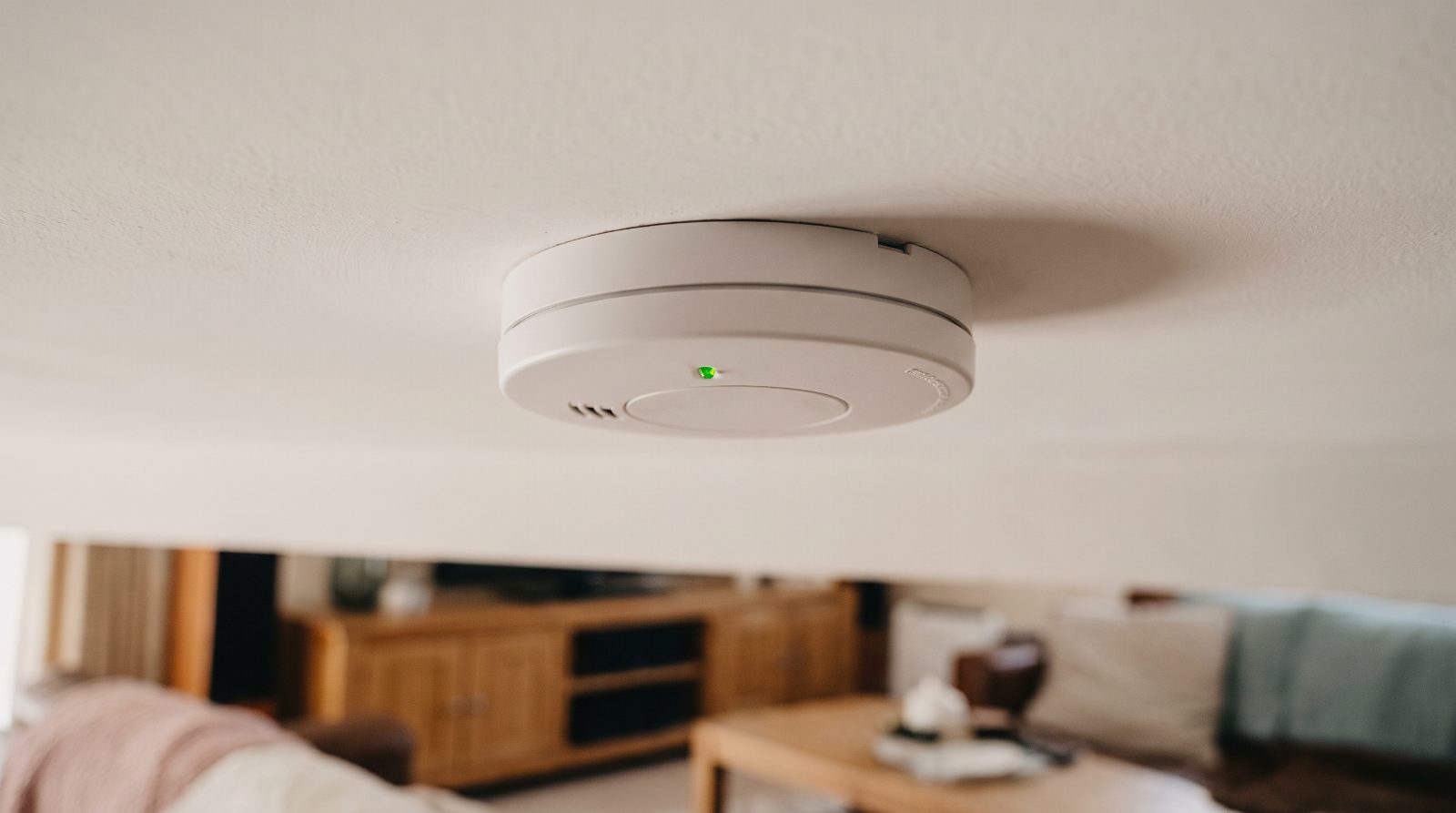
Alongside gas and electrical safety, smoke and carbon monoxide alarm requirements form one of the core statutory safety obligations landlords in England must meet — and one where the responsibility for the initial check specifically sits with the landlord, not the tenant, which is a detail worth being clear on.
Smoke alarm requirements. At least one working smoke alarm must be fitted on each storey of a rental property used as living accommodation. This applies regardless of the property type — houses, flats, HMOs, all fall under the same basic requirement, though HMOs often carry additional, more detailed fire safety requirements on top of the baseline.
Carbon monoxide alarm requirements. A carbon monoxide alarm is required in any room containing a solid fuel burning appliance — a wood burner or open fire, for instance. Beyond that specific legal minimum, it’s increasingly recommended, and in many cases required by mortgage lenders, insurers, or local licensing conditions, to also fit carbon monoxide alarms in rooms containing any combustion appliance, including gas boilers — worth checking rather than assuming the legal minimum is sufficient for every purpose.
The critical point on timing and responsibility. All alarms must be tested and confirmed working at the start of every new tenancy, and this is explicitly the landlord’s responsibility to check — not something that can be left to the incoming tenant to discover and report if it turns out not to be working. After the tenancy has started, the general expectation shifts toward tenants testing alarms periodically themselves, but it remains good practice for a landlord or agent to confirm alarms are working during any routine property visit, rather than assuming they’ve remained functional throughout.
The consequences of non-compliance. Local authorities have the power to issue a civil penalty of up to £5,000 where a landlord fails to comply with alarm requirements, and this is an area local authorities do actively enforce, particularly following any incident or complaint that brings a property to their attention.
A practical habit worth building in. Treat alarm testing as a standard item on any routine inspection checklist, not a separate task that might otherwise be forgotten. It takes moments to confirm an alarm is working, and doing so consistently as part of an existing process is far more reliable than relying on a standalone reminder that competes for attention with everything else a landlord needs to track.
General information, not legal advice. Property Lounge, Guildford.
Need a second opinion?
We’re Property Lounge, an ARLA Propertymark accredited lettings agency in Guildford. If anything above raised a question about your own property, we’re happy to talk it through — whether or not you’re a client, and whether or not you ever become one. No charge, no obligation, and we won’t chase you afterwards.
You can see how our fully managed lettings service works, what it costs, or book a free rental valuation.
Call 01483 369209 or email lettings@propertylounge.co.uk.