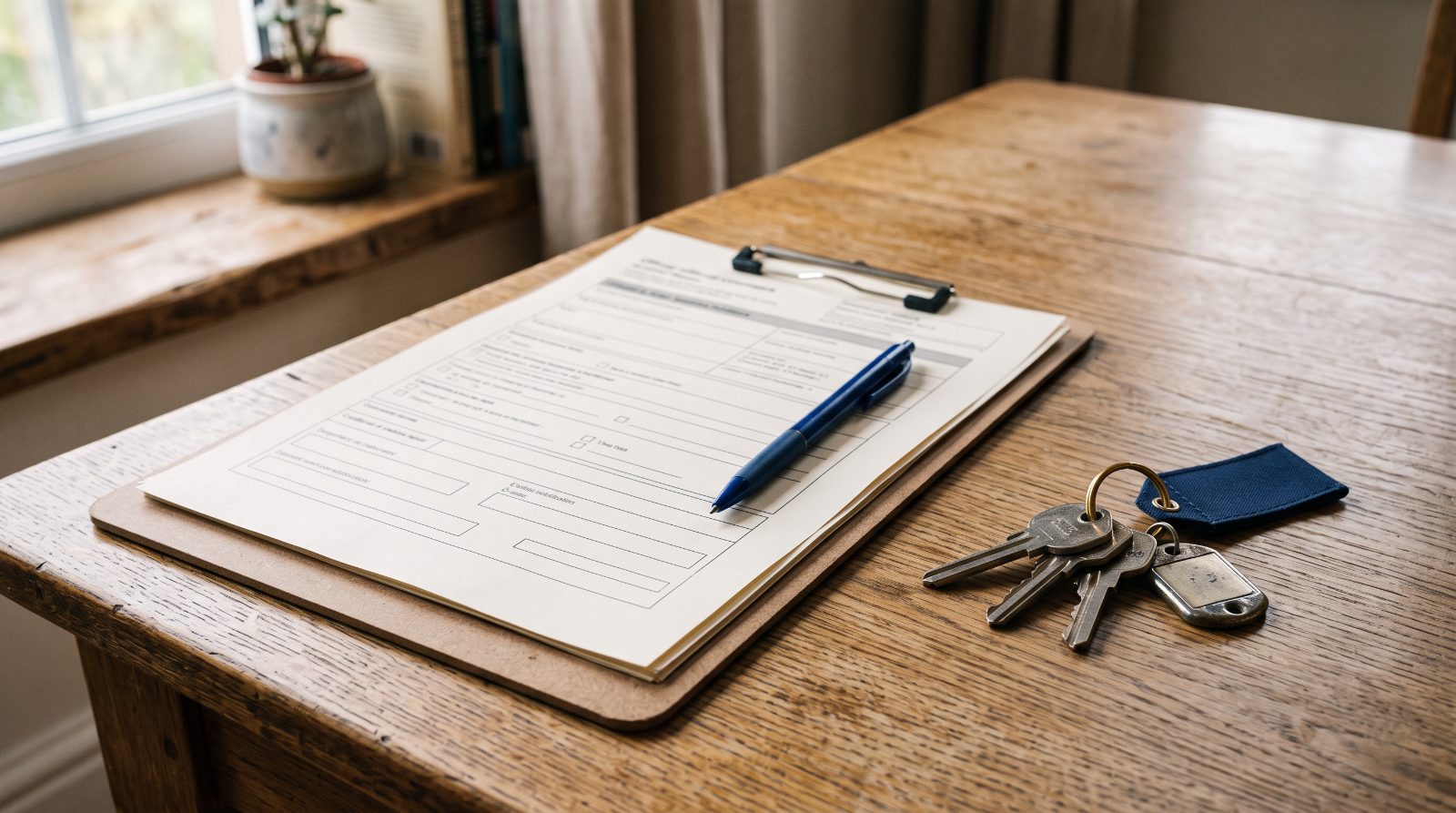
When a landlord and tenant cannot agree on deposit deductions, the tenancy deposit scheme’s adjudicator decides — and the burden of proving the deduction sits with the landlord. That single fact explains most of the outcomes. The adjudicator is not deciding who seems more reasonable. They are deciding whether the landlord has evidenced a loss.
Adjudication is free, it is based entirely on documents, and the decision is binding. There is no hearing, nobody visits the property, and nobody asks follow-up questions. Whatever you submit is the whole of your case.
What you have to prove
Three things, for every deduction.
That the tenant was responsible. Not that the property is worse than you would like — that this tenant caused it, beyond fair wear and tear.
The condition at check-in versus check-out. This is where cases are won and lost. Without a dated, detailed, photographed inventory signed at check-in, you have nothing to compare against, and the adjudicator will generally find for the tenant.
The amount. An invoice or a quote. Not an estimate, not a round number, and not what you think it is worth.
Fair wear and tear — the concept most landlords misjudge
Tenants are not required to hand back a property in the condition they found it. They are required to hand it back allowing for reasonable use over the length of the tenancy, by the number of people who lived there.
A carpet that has thinned over four years of a family living on it is wear and tear. The same carpet with a bleach stain is damage. Scuffed paint after three years is wear and tear; a wall the tenant painted purple is not.
Adjudicators also apply betterment. If a seven-year-old carpet with a nominal ten-year life is ruined in year eight, you are not entitled to a new carpet at the tenant’s expense — you get the remaining value, which may be very little. Landlords consistently over-claim here.
The four deductions that fail most often
Cleaning, with no check-in standard to compare to. “It wasn’t clean enough” fails without evidence of how clean it was at the start. Note also that you cannot require professional cleaning as a blanket term — the standard is the condition at check-in, allowing for fair wear and tear.
Redecoration after a long tenancy. After three or four years, repainting is usually maintenance rather than damage.
Full replacement cost for a partly worn item. Betterment again.
Garden and grounds. Frequently claimed, rarely evidenced, and often the landlord’s responsibility under the agreement anyway.
What actually wins
A proper check-in inventory, photographed, dated, and signed or acknowledged by the tenant. Room by room, including inside the oven, the condition of every carpet, and meter readings. It takes forty minutes and it is the single highest-return forty minutes in lettings.
A check-out report in the same format, so the comparison is like for like.
Invoices, not estimates. Work actually done, actually paid for.
A clear, itemised deduction proposal sent to the tenant promptly, with reasons. Many disputes settle at this stage simply because the landlord explained themselves.
Get the protection right first
None of this matters if the deposit was not protected properly. Protect within 30 days and serve the prescribed information. Fail, and you can be ordered to repay up to three times the deposit, and you lose the ability to rely on certain possession grounds. The full requirement.
Note as well that rent in advance is now capped at one month, so the deposit is a larger share of your total protection than it used to be — another reason to get the evidence right rather than relying on a cushion of prepaid rent.
The practical view
Most deposit disputes are avoidable and most are small. Weigh the cost of pursuing a marginal deduction against the delay and the relationship — particularly if the tenant is leaving on good terms and might otherwise recommend you.
Where a claim is genuine and evidenced, pursue it. Where it is a judgement call about a tired carpet, the adjudicator will very likely side with the tenant, and you will have spent six weeks finding that out. A proper end-of-tenancy process prevents far more disputes than it resolves.
General information, not legal, tax or financial advice. Property Lounge, Guildford.
Need a second opinion?
We’re Property Lounge, an ARLA Propertymark accredited lettings agency in Guildford. If anything above raised a question about your own property, we’re happy to talk it through — whether or not you’re a client. No charge, no obligation.
See how our fully managed lettings service works, what it costs, or book a free rental valuation.
Call 01483 369209 or email lettings@propertylounge.co.uk.